English| EUR
Suggested for you
More currencies
Choose a language
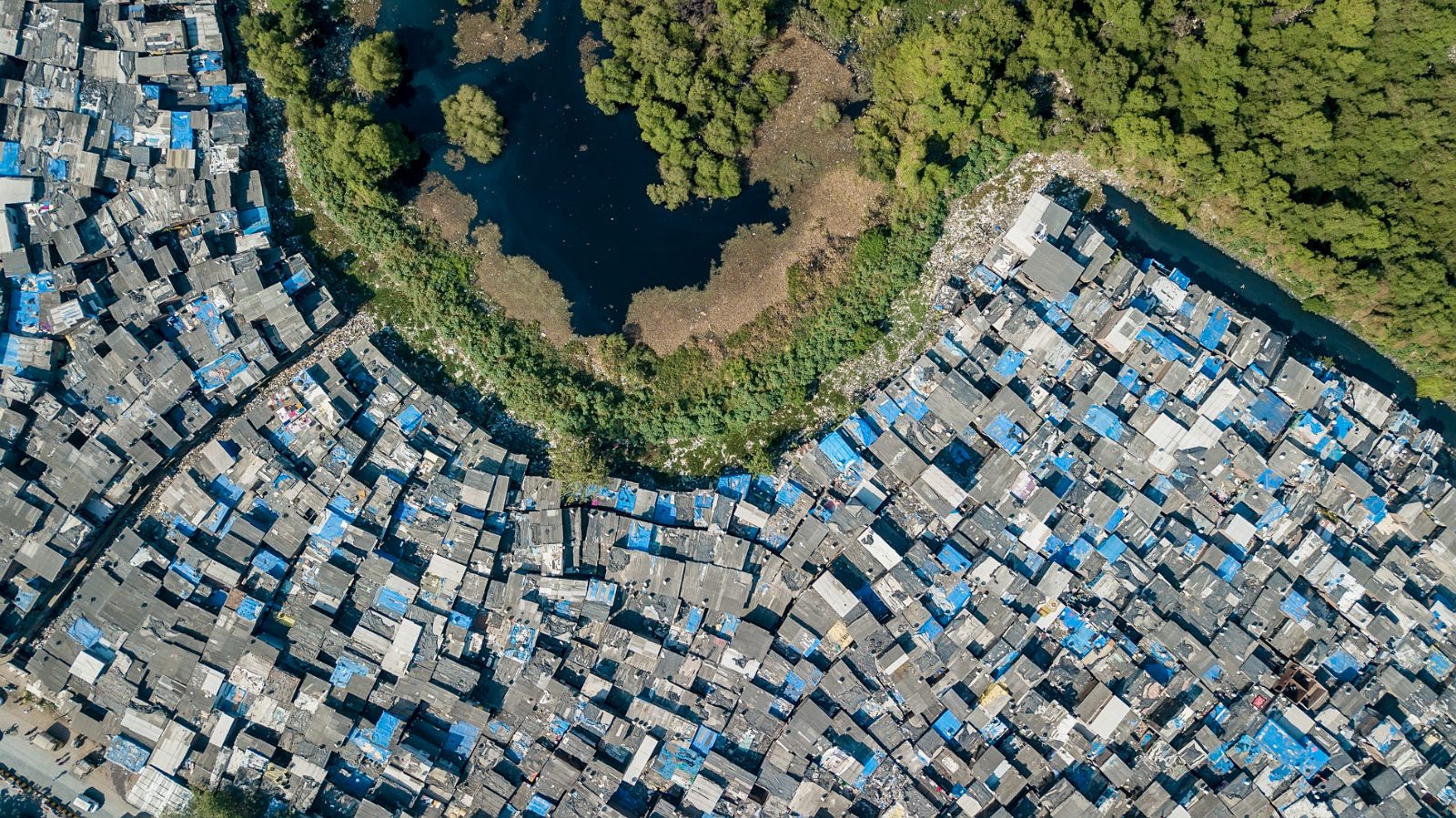
Dharavi's physical footprint belies its economic weight. Tucked between Mumbai's central railway lines and Mahim Creek, the settlement occupies less space than many assume yet houses a population that would fill a mid-sized city. Understanding the scale helps frame what visitors encounter during a walk-through.
Quick answer
Dharavi spans approximately 2.39 square kilometres (590 acres) and is home to an estimated 1 million residents, making it one of the most densely populated areas in the world. The settlement stretches roughly 2.5 kilometres from north to south and averages 800 metres in width. Despite its compact size, Dharavi generates an annual turnover exceeding $1 billion through thousands of small-scale industries.
Dharavi is the most populous slum in Asia, yet its boundaries fit entirely within a corridor narrower than most airport runways. The settlement emerged in the late 19th century on marshland between two railway lines, and its borders have remained largely fixed for decades. What changed was density. Multi-storey structures replaced single-room huts, and every available square metre now serves a function—residential, industrial, or both. The question of how big is dharavi slum depends on whether you measure land or lives. By area, it ranks smaller than many global informal settlements, but by population per hectare, few rivals exist. Over 1 million people share 239 hectares, a density approaching 40,000 residents per square kilometre in some pockets. The Kumbharwada pottery district, the leather tanneries of the 13th Compound, and the recycling yards along the northern edge all operate within this compact geography. Workshops occupy ground floors, families live above, and the lanes between them rarely exceed two metres in width. Mumbai's expansion has turned Dharavi into a central node. What was once peripheral marshland now sits minutes from Bandra-Kurla Complex and the domestic airport. The settlement's economic output—leather goods, textiles, pottery, recycled plastics—flows to buyers across India and beyond. Guided walking experiences navigate the main arteries, where the scale becomes legible on foot. Visitors see how the footprint accommodates 15,000 single-room factories, a network of mosques and temples, schools, clinics, and a social structure that functions without formal municipal planning. The compact size also explains the challenges. Infrastructure upgrades require coordination across thousands of landholders, and the absence of vehicle access means materials move by handcart. Redevelopment proposals have circulated for decades, but the density makes relocation complex. For now, Dharavi remains a demonstration of how much economic activity can concentrate in a constrained space. The true scale reveals itself in motion—through the alleys, past the workshops, among the residents who have built a vertical, layered world within a footprint smaller than many city parks.
“Over 1 million residents share 239 hectares, creating one of the highest population densities on the planet.”
Dharavi is centrally located in Mumbai, making it accessible via the city's extensive suburban railway network. The most efficient way to reach the area is by taking local trains to stations situated on its periphery.
Western Line to Mahim Junction
Harbour Line to Kings Circle Station
Central Line to Sion Station
Direct to Dharavi Main Road
For those unfamiliar with the area, arriving at Sion, Mahim, or Bandra stations allows for easy transition into the neighborhood. Navigating via local train is recommended to avoid the unpredictable traffic congestion often found on Mumbai's main arterial roads.
The best arrival window is 08:00–17:00, as daylight is essential for navigating the complex, narrow alleys of Dharavi. Visiting during these hours ensures safe movement through the dense settlement and allows for clear observation of the diverse local industries.
Cooler, 20°C–30°C
This period offers the most comfortable walking conditions for navigating the dense industrial areas.
Hot and dry, 25°C–35°C
High temperatures require early morning visits to avoid the peak heat of the afternoon.
Monsoon, 24°C–30°C
Heavy rainfall can make the narrow pathways difficult to traverse; use caution during these months.
—
Arriving at 08:00 allows you to witness the start of the workday when industrial activities begin.
Verdict: The best time to visit is during the cooler months of November to February, arriving within the 08:00–17:00 window to maximize daylight for navigating the slum's layout.
Dharavi is an open residential and industrial area in Mumbai, meaning there is no official admission fee for entry. While access to the neighborhood itself is free, visitors often choose to participate in organized tours to navigate the complex alleyways and learn about the local economy.
Verdict: Entry to the area costs 0 INR, though optional guided tours incur separate costs depending on the service provider.
Dharavi is a public residential and commercial neighborhood, meaning the area is technically accessible at all times. While the streets remain open, visitors should be aware that the community functions as a living workspace.
Everything you need to know about how big is dharavi slum
The settlement covers approximately 2.1 square kilometers, making it one of the most densely populated urban areas in the world. While you may wonder how big is dharavi slum by population, estimates suggest it is home to nearly one million residents. Diverse local industries, such as leather processing, pottery, and recycling, are packed into this compact space. Visitors often research how big is dharavi slum to understand its scale, but the true impact comes from seeing the intricate web of micro-enterprises. There is no formal entry fee to access public paths within the neighborhood, as it is a residential area. While you can technically walk through public streets, joining a guided tour is highly recommended to respect resident privacy and navigate the complex geography. When planning your visit, keep in mind how big is dharavi slum can be overwhelming for first-timers; professional guides help you observe daily life without causing disruption. The site is accessible 24 hours a day, though the best arrival window is between 08:00 and 17:00 for optimal daylight visibility. We recommend adhering to this window to ensure you can safely navigate the dense network of paths and observe the vibrant workshops in operation.