English| EUR
Suggested for you
More currencies
Choose a language
Dharavi's reputation as the world's largest slum has circulated for decades, but the reality is more nuanced. This guide unpacks the figures behind Dharavi's size, compares it to other informal settlements globally, and explains why the question itself reveals more about density than sheer scale.
Quick answer
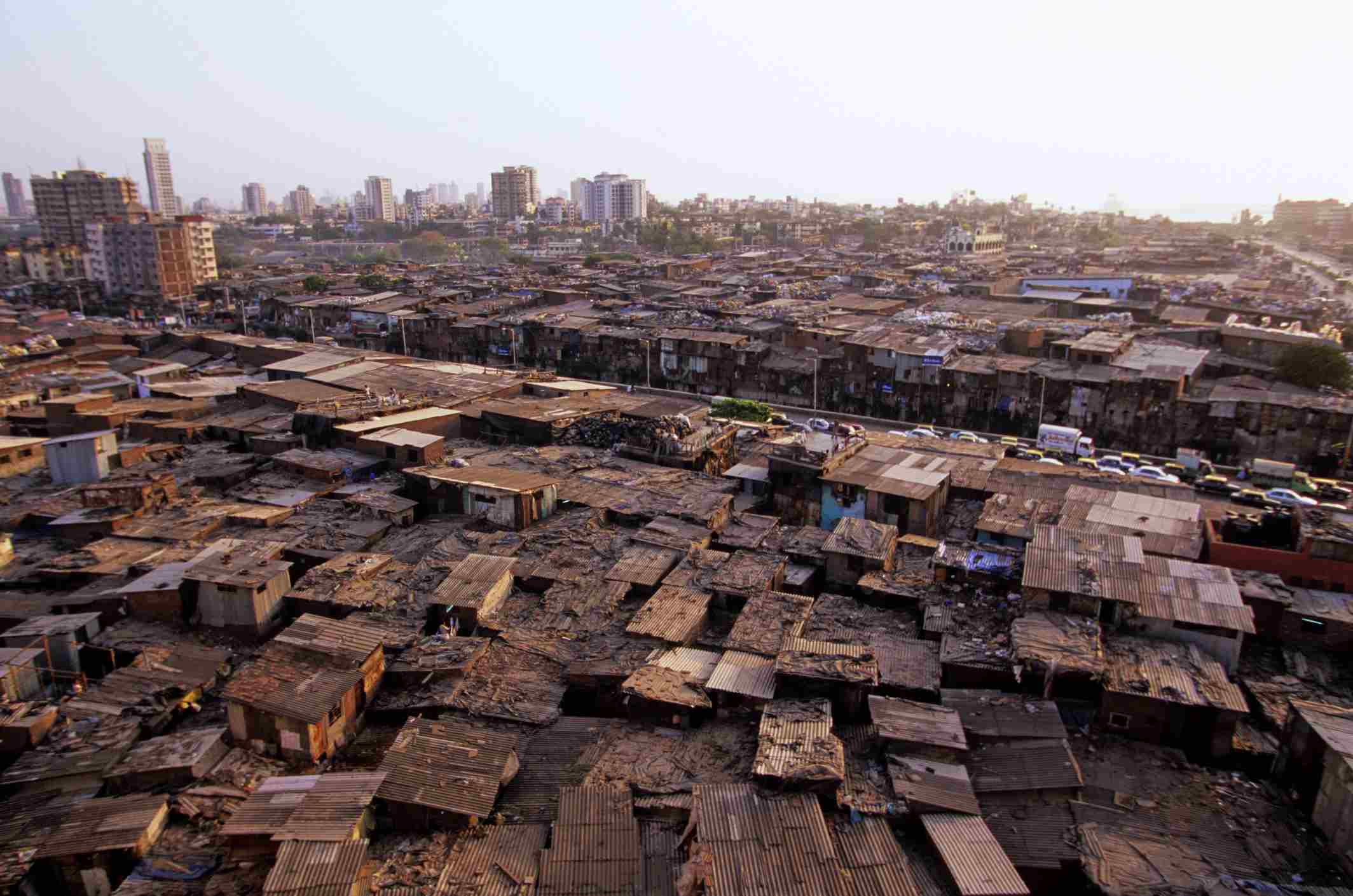
Dharavi is not the largest slum in the world by land area or population. While it spans roughly 2.1 square kilometers and houses an estimated 700,000 to one million residents, larger informal settlements exist in cities like Mexico City, Nairobi, and Karachi. What sets Dharavi apart is its extraordinary population density—up to 277,000 people per square kilometer—making it one of the most densely packed urban areas on the planet.
Dharavi sits on 535 acres in the heart of Mumbai, wedged between two railway lines that carry the city's commuters north and south. The settlement emerged in the late 19th century as a fishing village, then grew as migrant workers from across India arrived seeking work in the tanneries, potteries, and textile units that still define its economy today. Its central location—minutes from Bandra-Kurla Complex and the international airport—makes the land beneath it extraordinarily valuable, a fact that shapes every conversation about its future. The confusion over whether Dharavi is the largest slum in the world stems from conflicting definitions and outdated data. By population, settlements like Neza-Chalco-Ixta in Mexico City and Kibera in Nairobi have larger resident counts, though estimates vary widely depending on the source. By area, informal settlements in cities like Karachi and Manila cover far more ground. What Dharavi does hold is the distinction of extreme density: narrow alleyways barely wide enough for two people to pass, multi-story structures packed into spaces where formal planning would never permit construction, and a residential intensity that turns every square meter into contested, inhabited space. The settlement is not a monolith. Dharavi contains 13 distinct neighborhoods, each organized around specific industries or communities of origin—Tamil potters in one zone, leather workers from Uttar Pradesh in another, recycling units that process an estimated 80 percent of Mumbai's plastic waste clustered near the transit corridors. Annual economic output from Dharavi's micro-enterprises is estimated at over $1 billion, a figure that challenges the assumption that informal housing equals economic stagnation. Residents here are landlords, factory owners, and employers, not simply laborers waiting for rescue. Visitors often arrive expecting a landscape of despair and leave struck by the density of commerce, the coherence of the built environment, and the sheer organizational complexity required to sustain nearly a million people on two square kilometers without citywide water or sanitation infrastructure. The question of whether this is the world's largest slum misses the point. What matters is that Dharavi functions as a city within a city, and understanding it requires moving past the label and into the lived reality of its streets.
“Dharavi contains 13 distinct neighborhoods, each organized around specific industries or communities of origin, with annual economic output estimated at over $1 billion.”
The classification of Dharavi often leads to confusion due to varying definitions of population density and geographical scale. These misconceptions frequently arise from attempts to rank informal settlements without standardized global metrics.
MythDharavi is definitively the largest slum in the world.
FactWhether Dharavi is the largest depends on whether one measures by total land area or population density, with other global settlements often exceeding its scale.
MythDharavi is an unorganized, impoverished shanty town.
FactDharavi is a highly active economic hub with a diverse range of small-scale industries and a robust, organized internal economy.
MythDharavi is a homogenous, residential-only area.
FactThe area is a complex mix of residential, commercial, and industrial zones where residents live and work in close proximity.
The land that would become Dharavi began as a marshy expanse between the Mithi River and Mahim Bay, a fishing settlement inhabited by the Koli community long before colonial intervention. In the 1880s, British administrators pushed leather tanneries and other noxious industries out of the colonial Fort district, relocating them to this peripheral zone. Migrant workers—many from Gujarat, Tamil Nadu, and Uttar Pradesh—followed the factories, building makeshift dwellings on reclaimed swampland that the municipal authority had neither the will nor the resources to regulate. By the early twentieth century, Dharavi had absorbed potters from Saurashtra, embroidery specialists from Uttar Pradesh, and recyclers who established what would become one of Asia's most efficient informal waste-processing networks. The question of whether is dharavi the largest slum in the world emerged only in the 1980s, when journalists and researchers began comparing informal settlements across continents; earlier censuses had classified the area simply as an unplanned industrial quarter. Post-independence growth accelerated after 1947, when Partition refugees and drought-displaced farmers swelled the population. The 1960s saw the construction of single-storey workshops for leather goods, textiles, and metal fabrication, many of which remain operational today. By the 1970s, Dharavi had matured into a dense manufacturing ecosystem generating an estimated annual turnover in the hundreds of millions of rupees, yet its residents still lacked formal title to the land. Municipal neglect persisted through the 1980s and 1990s, even as the settlement's economic output rivaled that of organized industrial estates. Redevelopment proposals surfaced in the 2000s, though none have fundamentally altered the street grid or workshop clusters. Today's visitor walks the same narrow lanes that nineteenth-century tanners traversed, passing multi-storey structures that now house second- and third-generation artisans. The pottery kilns near the 90 Feet Road, the recycling yards along the Mithi River, and the embroidery ateliers in the central wards are direct descendants of the workshops established more than a century ago. The settlement's physical fabric—corrugated roofs, shared courtyards, hand-painted signage—preserves a material record of incremental, community-led urbanism that predates most of Mumbai's planned suburbs.
British authorities relocate tanneries and polluting industries from Fort district to marshy land between Mithi River and Mahim Bay.
Migrant workers from Gujarat, Tamil Nadu, and Uttar Pradesh settle near factories, building informal housing on reclaimed swampland.
Partition refugees and drought-displaced farmers arrive, accelerating population growth and workshop construction.
Single-storey workshops for leather, textiles, and metal fabrication are established, many of which remain operational today.
Dharavi matures into a dense manufacturing hub with estimated annual economic output in the hundreds of millions of rupees.
Municipal and private redevelopment proposals emerge, though none have fundamentally reshaped the settlement's street grid or industrial clusters.
Dharavi is a public residential and commercial area that remains accessible at all times. Visitors may enter the neighborhood throughout the day and night.
Dharavi is located centrally in Mumbai, Maharashtra 400017, India, making it accessible via the city's extensive suburban railway network. The most direct approach for visitors is via the local train stations situated on the borders of the area.
Western Line to Mahim Station
Harbour Line to Kings Circle Station
Direct to Dharavi Main Road
Plan your visit within the best arrival window of 09:00–17:00 to ensure daylight hours for navigating the narrow alleys. Mahim Station serves as a common entry point for those arriving by train.
Everything you need to know about is dharavi the largest slum in the world
Dharavi is frequently cited as one of the most densely populated urban areas, though its status as the single largest slum in the world is often debated due to varying definitions of informal settlements. It remains a significant focal point for those studying urban geography and social development.
The neighborhood is a bustling, self-sustaining community characterized by a diverse array of small-scale industries and micro-enterprises. It functions as a complex socio-economic hub within the heart of Mumbai.
There is a 0 INR entrance fee required to enter the public areas of the neighborhood. This is a public space, so visitors do not pay for access.
The best arrival window is between 09:00 and 17:00 when daylight ensures better visibility for navigating the narrow alleys. Planning your visit during these hours allows for a clearer experience of the local environment.
Visiting the area is common for those interested in local livelihoods, though guided exploration is generally recommended to ensure respectful engagement. Many people travel here specifically to understand the realities behind the question is dharavi the largest slum in the world.
Children are allowed, but the environment is highly active and crowded, requiring constant adult supervision. Visitors should ensure their group is comfortable navigating dense, industrial, and residential pathways.
The most common mistake is failing to recognize the area as a vibrant center of commerce rather than just a place of hardship. Visitors often arrive without understanding the scale of the recycling and leather industries that define the local economy.
While it is often called the largest, several other informal settlements globally compete for this title depending on population metrics and spatial boundaries. The specific inquiry into whether is dharavi the largest slum in the world continues to be a subject of global urban research.