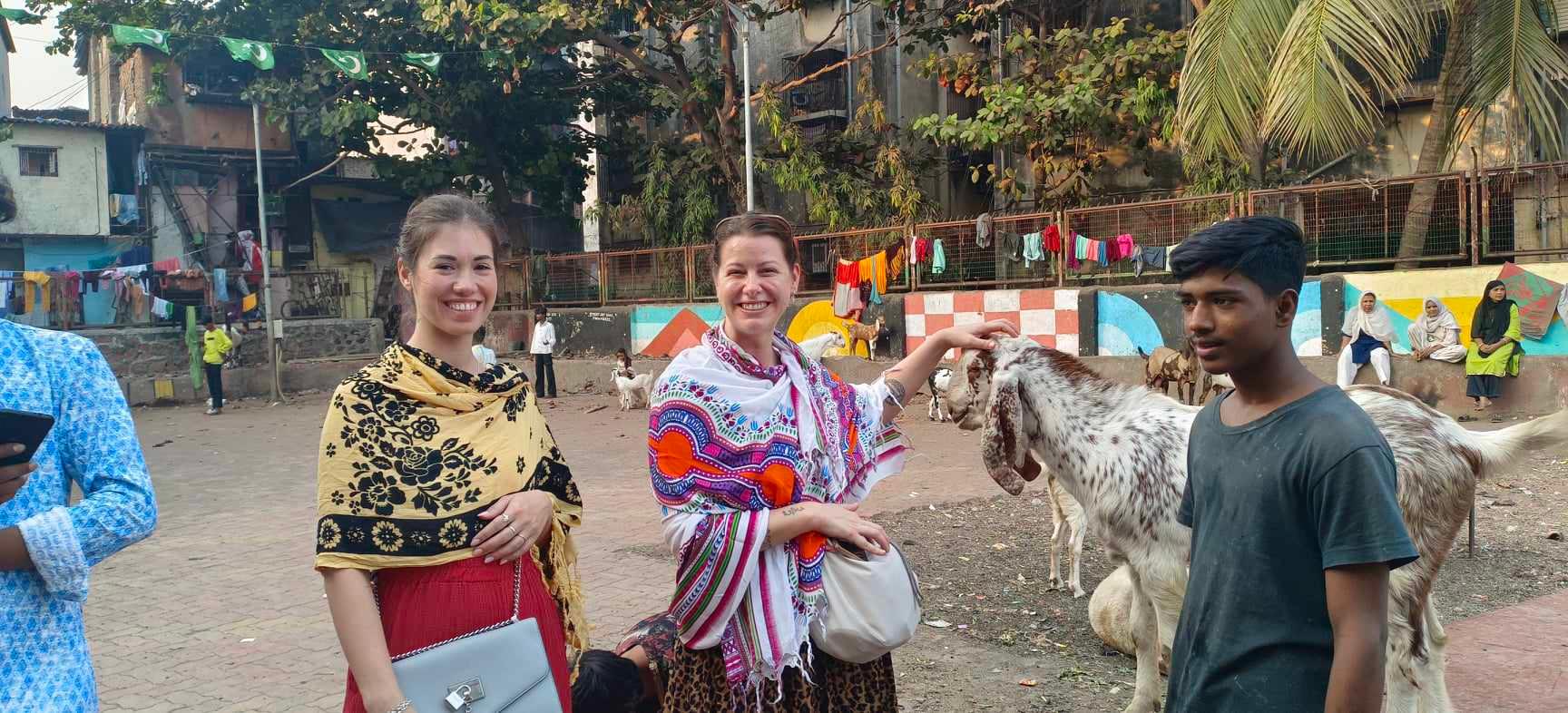
Dharavi Slum Tour
Tours & tickets

Hand-picked by our editors — only the best 5 experiences from 18 reviewed.

Open today 00:00 – 23:59
Attendance: Moderate
Recommended arrival within the 09:00–17:00 window for optimal visibility.
Free cancellation Instant confirmation Mobile voucher Verified partner Small group
Tickets

Choose your ticket

Verified partners for every tour, free cancellation where available, and instant confirmation on every booking.

Dharavi Slum & Dhobi Ghat Laundry Tour with Local Resident 3 hr
Standard Entry

Dharavi Slum & Dhobi Ghat Laundry Tour with Local Resident

5 (562)
€3
per person
Instant Mobile voucher Flexible — change up to 24h

Walk through Mumbai's working neighborhoods with a resident guide and see thriving industries firsthand

Reserve
Mumbai Local Life: Dharavi, Dhobi Ghat & Dabbawallas 4 hr 30 min
Standard Entry

Mumbai Local Life: Dharavi, Dhobi Ghat & Dabbawallas

4.9 (749)
€13
per person
Instant Mobile voucher Flexible — change up to 24h

Journey through Mumbai's working neighborhoods with a local guide on this authentic cultural immersion.

Reserve

Prices from verified partners. Availability updates in real time at checkout. Free cancellation policies apply where shown.

What you'll do

Inside a tour, step by step

  1. 01 30m

    Arrival

    Meeting at designated entry point for a Dharavi slum tour package briefing

  2. 02 1h

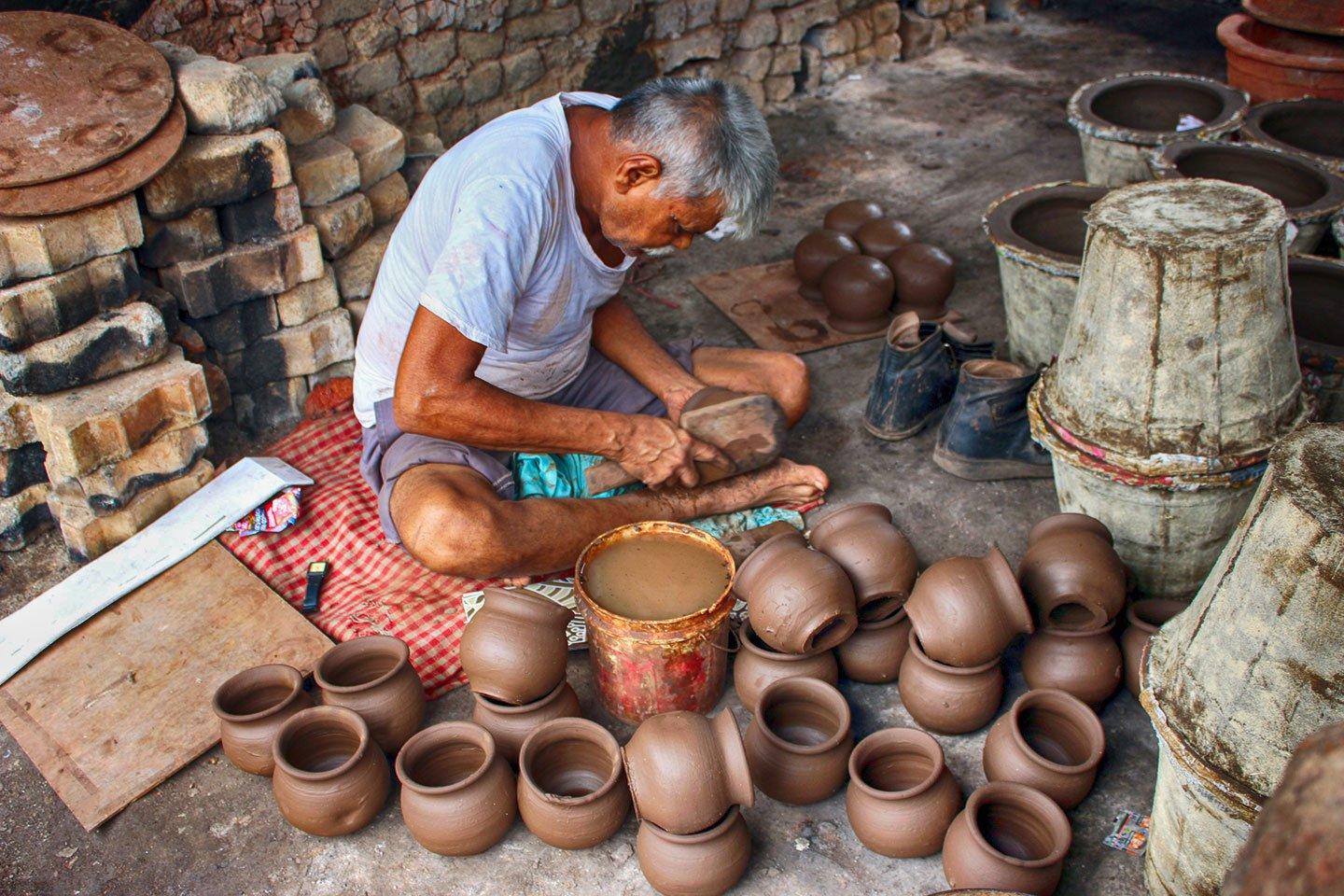
    Pottery District

    Observation of traditional kilns and clay craft

  3. 03 1h

    Recycling Area

    Touring the plastic and metal processing units

  4. 04 45m

    Residential Lanes

    Walking through community housing and embroidery units

  5. 05 15m

    Departure

    Returning to the main road for exit

Highlights

What you'll see inside the attraction

The landmarks, rooms, and views travelers on this tour remember — all visible on a single visit.

Kumbharwada Pottery Kilns

Traditional potters use unique kilns to create goods exported across India. It is a center of historical craftsmanship.

Pottery industry

Pottery district

The 14th Mile

Recycling Hub

Recycling industry

Sorting facility

Industrial zone Mumbai

Embroidery Workshops

Textile workshop

Needlework studio

Artisan district

Bandra-Worli Sea Link View

Sea Link bridge

Modern architecture

Coastal landmark

Community Schools

Local school

Education center

Community building

Head to head

Dharavi Slum Tour Package vs Standard Mumbai Sightseeing — How to Choose

They complement each other; most visitors who do both find the Dharavi slum tour package a deeper, localized immersion, while a city sightseeing tour provides a better overview of Mumbai landmarks.

Feature Top pick Dharavi Tour City Sightseeing
Focus of experience
Major historical monuments
Level of social interaction
Low with professional guides
Area coverage
Multiple city-wide districts
Typical group size
10–30 people
Cultural engagement
Panoramic architectural viewing
Logistics and accessibility
Air-conditioned vehicle transit

Verdict: Choose a dharavi slum tour package tour if you prioritize human-centric stories, or opt for a standard city sightseeing tour for a comfortable, broad survey of Mumbai landmarks when you have limited time.

How your ticket works

Book your ticket in 3 steps

  1. 01

    Book online

    Choose your ticket, select your date, and reserve in under two minutes. Secure checkout handled by our verified partner.

  2. 02

    Receive your mobile voucher

    Instant confirmation by email, with a mobile voucher you can save offline. No printing, no queuing at a collection desk.

  3. 03

    Show & enter

    Arrive at the entrance, show your voucher on your phone, and walk in. Most tickets include priority or skip-the-line access.

Plan your visit

Everything you need to know before you go

Practical details for your visit straight from our verified partners — hours, access, rules, and how to get there.

Open today · 00:00 – 23:59
Opening hours
00:00–23:59
Address
Dharavi, Mumbai, Maharashtra, India
Accessibility
Narrow alleyways may be difficult for wheelchairs
Arrival window
09:00–17:00
Navigation
Local guides recommended for complex layout
Mon
00:00 – 23:59
Tue
00:00 – 23:59
Wed
00:00 – 23:59
Thu
00:00 – 23:59
Fri
00:00 – 23:59
Sat
00:00 – 23:59
Sun
00:00 – 23:59
Main entrance

Mahim Junction

Mahim, Mumbai

Common starting point for many tours

Address
Dharavi, Mumbai, Maharashtra, India
Navigation
Local guides recommended for complex layout

How to get there

🚆
Public transport · 30-60m · Low cost

Use the Western or Harbour railway line to reach Mahim or Sion stations.

🚕
Taxi · 45-90m · Variable cost

Hire a local cab to drop you at the main entry points of the district.

Dress code

Modest clothing is encouraged out of respect for local residents. Avoid sleeveless tops and shorts above the knee.

Bags & security

Keep belongings minimal and secure at all times. Large backpacks are discouraged due to the confined space of the alleys.

Photography

Always ask permission before photographing individuals or residential doorways. Street photography of the industrial areas is generally accepted.

Accessibility

The area consists of uneven ground and very narrow paths. It is not suitable for individuals with mobility challenges.

Mobile phones

Mobile phones are permitted for communication and photos. Maintain awareness of your surroundings while using devices.

What to bring

  • Water bottle
  • Comfortable closed-toe shoes
  • Sunscreen
  • Hat
  • Modest clothing
  • Light cash
  • Hand sanitizer

Not allowed

  • Drones
  • Tripods
  • Large professional lighting
  • Alcohol
  • Prohibited substances
  • Loudspeakers
  • Weaponry
  • Large suitcases

Families & strollers

Children are welcome but must be supervised closely by adults. Consider the density and heat when bringing young children.

Food & drink

Local snacks are available but ensure they are freshly prepared. Carry a reusable water bottle to stay hydrated in the Mumbai heat.

Pets

Pets are not suitable for these walking paths. Please leave animals at your accommodation.

Good to know

Respect local privacy as this is a residential and industrial community. Engage with local business owners to understand the economic impact of the region.

Meeting points

Where to find us

Mahim Junction

Mahim, Mumbai

Common starting point for many tours

Get directions

Sion Station

Sion, Mumbai

Accessible transit hub for meeting guides

Get directions
Around your visit

Everything else worth knowing

Best time to go, insider tips, nearby landmarks, and the cancellation fine print — flip through to skim what matters to you.

Best time to visit

How crowds, weather, and events shift across the year.

Winter

November to February offers the most comfortable walking temperatures between 20°C and 30°C.

Summer

March to May is hot and humid, requiring early morning starts.

Monsoon

June to September brings heavy rainfall, making narrow alleys muddy and difficult to navigate.

Shoulder season

October provides a balance between heat and accessibility.

Helpful tips for your visit

Small details that turn a good visit into a great one.

Hire a local guide

Using a professional for your dharavi slum tour package ensures you follow ethical paths and support the community.

Stay hydrated

Mumbai heat is significant during the 09:00–17:00 arrival window.

Respect boundaries

Never enter private homes without an invitation from a local resident.

Dress appropriately

Follow local customs by covering shoulders and knees.

Support local artisans

Purchase goods directly from the makers to boost the local economy during your dharavi slum tour package experience.

Nearby landmarks

Non-bookable sights within a short walk — free to visit, easy to pair.

Mahim Nature Park

10 min walk

A green oasis located near the edge of the residential area.

Bandra-Worli Sea Link

15 min drive

An engineering marvel visible from the nearby coastal road.

Sion Fort

10 min drive

A 17th-century fortification offering views of the surrounding urban landscape.

Cancellation policy

Flexible, no hidden fees.

Since entrance is 0 INR, there is no conservation fee to refund. Tours booked through third-party operators adhere to their specific terms.

Where to stay

Hotels & districts near the attraction

Hand-picked options within walking distance — pick a district for vibe, or a specific hotel for convenience.

Bandra West

15 min drive
District

Upscale area with numerous boutique hotels.

Kurla

15 min drive
District

Mid-range transit-friendly accommodation options.

About

The place, in context

Dharavi produces an estimated $1 billion in annual economic output from 2.1 square kilometres of land wedged between Mumbai's Central and Western railway lines. Established in 1882 as a fishing village on tidal marshland, the settlement absorbed waves of Tamil leather workers, Gujarati potters, and Uttar Pradesh embroiderers over fourteen decades, each community carving micro-economies into the grid. Today thirteen distinct industrial zones operate within Dharavi's seventy alleys, from the 15,000-employee recycling sector that processes forty percent of Mumbai's plastic waste to the Kumbharwada pottery quarter firing clay into terracotta vases and oil lamps sold across Maharashtra. The settlement gained global visibility after Danny Boyle's 2008 film depicted it through a Western poverty lens, but residents and urbanists have long contested the "slum" designation. Dharavi functions as a self-contained industrial township with literacy rates exceeding seventy percent, single-room factories exporting leather goods to Europe, and a spatial density that produces foot traffic, social cohesion, and economic resilience. Architect Matias Echanove describes it as a "shadow city" — informal but not disorganized, low-income but not economically stagnant. The recycling economy alone employs 30,000 sorters who separate PET from PVC, shred copper wire, and melt down aluminium cans in coal-fired furnaces, creating a circular supply chain that predates municipal waste management systems. Walking tours led by resident guides emerged in the mid-2000s as a counter-narrative to voyeuristic slum tourism, offering economic participation and interpretive control to Dharavi's own population. Female guides trained through community organizations now lead routes through the 90 Feet Road commercial corridor, the bakery lanes producing 10,000 loaves daily, and the zari embroidery workshops where artisans stitch gold thread onto wedding saris. These dharavi slum tour package experiences last two to three hours, running mornings and afternoons to align with workshop schedules. Tours pause at the Mahim Creek edge where fishermen still cast nets, and at the open-air tannery where buffalo hides cure in chromium drums before export to Italy and Spain. The leather district alone generates ₹600 crore annually, its output stitched into European fashion-house handbags and sold under luxury labels. Dharavi's architectural form follows economic function: single-story workshops expand vertically into two- and three-story structures as businesses grow, with residential units stacked above production floors. Corrugated-metal roofs layer over each other, creating a dense canopy that blocks satellite imaging but provides shade and rainwater channels. The settlement lacks formal land titles — most residents hold occupancy rights dating to pre-1995 municipal surveys — yet property transactions occur through informal notaries, and rental markets function with lease agreements enforced by community elders. A dharavi slum tour package reveals this parallel governance: elected mohalla committees mediate disputes, coordinate waste collection, and negotiate electricity hookups with municipal authorities, operating as de facto civic infrastructure where official systems end.

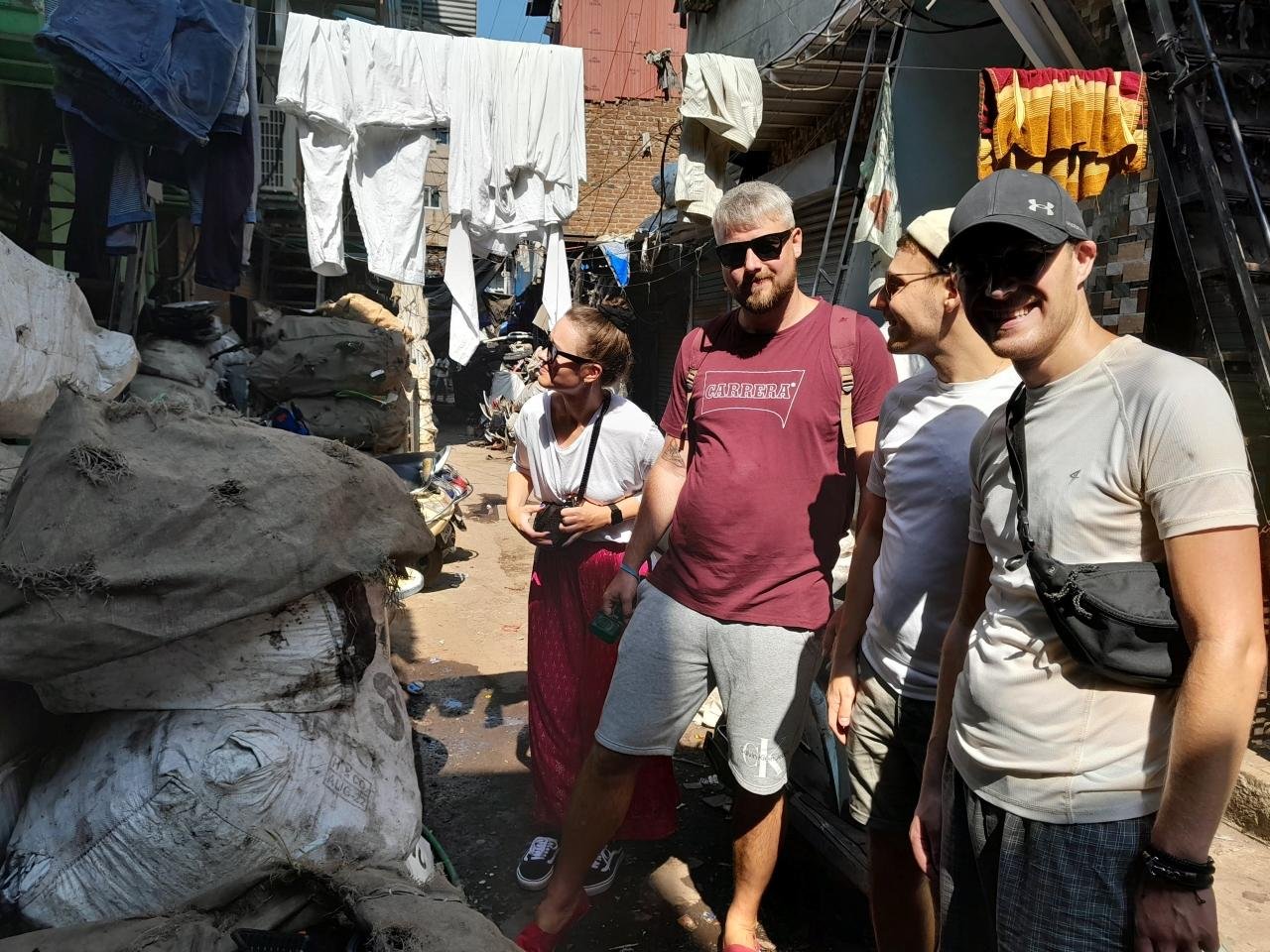
"Dharavi functions as a shadow city — informal but not disorganized, low-income but not economically stagnant."
Your experience

What a tour day looks like

A step-by-step walkthrough of the visit — what you'll see, how long each stage takes, and the details that matter.

You meet your guide at the Mahim Junction footbridge at 9 AM, where the Western Railway line curves past Dharavi's eastern boundary. The first alley opens into the recycling zone, where workers sort mountains of plastic bottles into blue, green, and clear categories under tarp canopies. Your guide — a third-generation Dharavi resident — explains the sorting taxonomy: PET bottles fetch ₹18 per kilogram, while PVC pipes bring ₹12. You step over drainage channels and duck beneath clotheslines to reach the pottery district, where twelve families wedge clay on manual wheels and stack unfired bowls in pyramid towers. The air smells of wet earth and coal smoke. The route continues into the leather quarter, where men scrape buffalo hides with curved blades and hang finished panels on overhead racks. Your guide points out the workshop that supplies a Milan fashion house, its floor stacked with caramel-brown leather cut into handbag panels. You pause at a bakery producing pav bread, its wood-fired oven glowing orange, then cross into the garment lane where twenty sewing machines hum under a single corrugated roof. The tour ends at a rooftop chai stall overlooking the Mahim Creek, where your guide answers questions about redevelopment plans, school enrollment, and the mechanics of the dabbawalla supply chain that intersects Dharavi's northern edge. The walk covers roughly 1.5 kilometres over two hours, entirely on foot through pedestrian-only lanes.

Frequently asked

Frequently asked questions about dharavi slum tour package tours

Are there entrance fees for a dharavi slum tour package?

The entrance fee is 0 INR as it is a residential community. Ensure your dharavi slum tour package supports local initiatives.

What are the recommended arrival hours for dharavi slum tour package tickets?

The best arrival window for this Mumbai landmark is 09:00–17:00. These daylight hours are essential for safe navigation.

Is a dharavi slum tour package tour safe?

Safety is generally high when accompanied by a professional guide for your dharavi slum tour package tour. Always stay with your group.

Can I take photos during my dharavi slum tour package?

Photography is allowed, but always request permission from residents first. Respect privacy while using your dharavi slum tour package tickets.

What should I wear for a dharavi slum tour package?

Wear modest, comfortable clothing and closed-toe shoes. This is essential for navigating the terrain on your dharavi slum tour package.

Is the area accessible for strollers?

Strollers are not recommended due to the extremely narrow and uneven alleyways. Opt for carriers if bringing small children on your dharavi slum tour package.

Do I need to book a dharavi slum tour package in advance?

Booking a guide is highly recommended to manage logistics. This ensures a respectful and structured dharavi slum tour package experience.

How do I reach the area for a dharavi slum tour package?

The area is accessible via Mahim or Sion stations. Use taxi or rail to reach the starting point for your dharavi slum tour package.

Are children allowed on a dharavi slum tour package?

Children are welcome but must be supervised. Consider the environment before bringing infants on a dharavi slum tour package.

Can I bring bags on my dharavi slum tour package?

Keep bags light and minimal. Large items will hinder movement through the narrow passages of your dharavi slum tour package.