Dharavi Slum Tour
Tours & tickets

Hand-picked by our editors — only the best 5 experiences from 12 reviewed.

Open today 08:00–17:30
Attendance: Moderate — summer season
Stay hydrated during morning hours.
Instant confirmation Mobile voucher Verified partner Free cancellation Local guide
Tickets

Choose your ticket

Verified partners for every tour, free cancellation where available, and instant confirmation on every booking.

Mumbai Insider: Dharavi, Dhobi Ghat & Dabbawalla Experience 4 hr 30 min
Standard Entry

Mumbai Insider: Dharavi, Dhobi Ghat & Dabbawalla Experience

4.9 (749)
€13
per person
Instant Mobile voucher Flexible — change up to 24h

Journey through Mumbai's working neighborhoods with a local guide—explore Dharavi, witness laundry in action, and meet the legendary lunchbox carriers.

Reserve
Dharavi Slum & Dhobi Ghat Walking Tour with Local Resident 3 hr
Guided Experience

Dharavi Slum & Dhobi Ghat Walking Tour with Local Resident

5 (562)
€3
per person
Instant Mobile voucher Flexible — change up to 24h

Walk through Mumbai's iconic neighborhood with a resident guide and witness thriving industry firsthand

Reserve

Prices from verified partners. Availability updates in real time at checkout. Free cancellation policies apply where shown.

What you'll do

Inside a tour, step by step

  1. 01 30 min

    Introduction

    Orientation and historical context

  2. 02 60 min

    Recycling Sector

    Observation of plastic and metal sorting

  3. 03 45 min

    Pottery Quarter

    Viewing artisan techniques in Kumbharwada

  4. 04 45 min

    Community Visit

    Interaction with local workshop artisans

Highlights

What you'll see inside the attraction

The landmarks, rooms, and views travelers on this tour remember — all visible on a single visit.

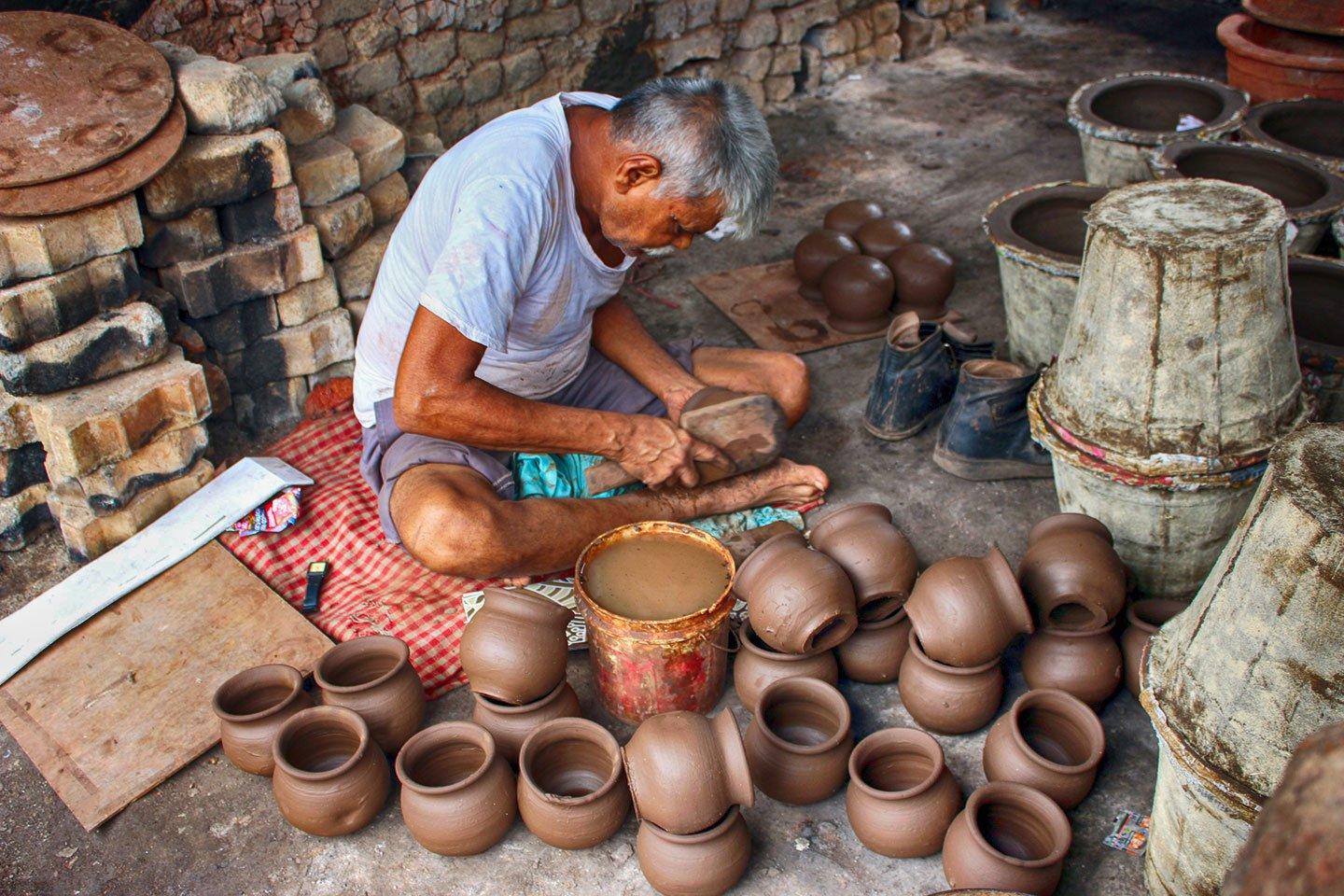
Kumbharwada Pottery Quarter

Artisans here use traditional kilns to create clay goods. This section houses hundreds of families who have practiced pottery for generations.

Head to head

Dharavi Slum Walking Tour vs. Mumbai City Tour: Which Experience Should You Choose?

The Mumbai city landmarks tour provides a broad overview of colonial architecture and heritage, while a dharavi slum walking tour offers an intimate look at the local recycling and pottery industries. They complement each other; most visitors who do both call the neighborhood-specific walk the more immersive experience.

Feature Top pick Dharavi Walking Tour City Highlights Tour
Primary Focus
Major colonial landmarks
Depth of Interaction
Observation from vehicle or afar
Time Commitment
4–8 hours
Group Size
1–15 guests
Geographic Scope
Multiple city districts
Logistics
Vehicle-based city transit

Verdict: Choose the dharavi slum walking tour tours for a focused cultural encounter, or the city highlights tour if you require dharavi slum walking tour tickets for a comprehensive overview of Mumbai landmarks alongside your dharavi slum walking tour tour.

How your ticket works

Book your ticket in 3 steps

  1. 01

    Book online

    Choose your ticket, select your date, and reserve in under two minutes. Secure checkout handled by our verified partner.

  2. 02

    Receive your mobile voucher

    Instant confirmation by email, with a mobile voucher you can save offline. No printing, no queuing at a collection desk.

  3. 03

    Show & enter

    Arrive at the entrance, show your voucher on your phone, and walk in. Most tickets include priority or skip-the-line access.

Plan your visit

Everything you need to know before you go

Practical details for your visit straight from our verified partners — hours, access, rules, and how to get there.

Open today · 08:00–17:30
Opening Hours
08:00–17:30
Address
Dharavi, Mumbai, Maharashtra, India
Accessibility
Varies by route; uneven terrain present
Best Arrival
08:00–10:00
Storage
Not available on site
Service Type
Guided walking tours only
Mon
08:00–17:30
Tue
08:00–17:30
Wed
08:00–17:30
Thu
08:00–17:30
Fri
08:00–17:30
Sat
08:00–17:30
Sun
08:00–17:30
Main entrance

Mahim Junction

Mahim, Mumbai

Common meeting spot for tours

Address
Dharavi, Mumbai, Maharashtra, India
Storage
Not available on site
Service Type
Guided walking tours only

How to get there

🚆
Public transport · 45 min · Low cost

Use the Western Line to Mahim Junction station. Exit towards the Dharavi side to meet your guide.

🚕
Taxi · 60 min · Variable

Hire a cab to a designated meeting point such as Mahim or Sion. Confirm the drop-off location with your tour provider.

Dress code

Modest clothing is recommended to respect local cultural norms. Loose, breathable fabrics are preferred for the humid summer heat.

Bags & security

Keep belongings minimal as pathways are narrow and crowded. Secure all valuables in a cross-body bag or internal pocket.

Photography

Always ask permission before photographing residents or their homes. Photography of sensitive industrial areas or children may be restricted by guides.

Accessibility

The area consists of narrow lanes and uneven surfaces that are not wheelchair accessible. Participants should be prepared for significant walking.

Mobile phones

Mobile phones are permitted for communication and photos. Ensure your device is charged and kept secure in crowded areas.

What to bring

  • Comfortable walking shoes
  • Bottled water
  • Sunscreen
  • Hat
  • Lightweight clothing
  • Cash for incidentals

Not allowed

  • Large backpacks
  • Drones
  • Professional video equipment
  • Tripods
  • Alcohol
  • Illegal substances
  • Laser pointers
  • High-heeled shoes

Families & strollers

The tour is educational but requires children to be closely supervised due to heavy industrial activity. Consult your provider regarding appropriate age limits.

Food & drink

Local snacks are sometimes included in tour packages, but carry your own bottled water. Avoid consuming street food unless explicitly recommended by your guide.

Pets

Pets are not permitted on a standard dharavi slum walking tour. Animal welfare and safety concerns make this an unsuitable environment for domestic pets.

Good to know

Guided tours are mandatory for navigating this complex urban landscape. Respect the privacy of the local community at all times.

Meeting point

Where to find us

Mahim Junction

Mahim, Mumbai

Common meeting spot for tours

Get directions
Around your visit

Everything else worth knowing

Best time to go, insider tips, nearby landmarks, and the cancellation fine print — flip through to skim what matters to you.

Best time to visit

How crowds, weather, and events shift across the year.

Winter

November to February offers the most comfortable temperatures for walking tours. Morning sessions remain ideal to avoid afternoon humidity.

Summer

March to May features high heat and humidity. Book early slots to finish before the midday temperature peak.

Monsoon

June to September brings heavy rainfall. Check with your tour operator if schedules are impacted by severe weather conditions.

Helpful tips for your visit

Small details that turn a good visit into a great one.

Book in advance

Secure your dharavi slum walking tour tours ahead of time to ensure availability. Popular slots fill up quickly during peak season.

Dress appropriately

Wear sturdy, closed-toe shoes for navigation. The ground in industrial zones can be uneven or wet.

Listen to guides

Follow your guide's instructions regarding where you can walk. They provide essential context for navigating the neighborhood safely.

Engage respectfully

Interact with locals politely when observing their work. This is a residential and working neighborhood, not a museum.

Carry cash

Keep small denominations for purchasing handmade items. Small local shops may not accept digital payments.

Nearby landmarks

Non-bookable sights within a short walk — free to visit, easy to pair.

Mahim Nature Park

10 min

A green space providing a contrast to the dense urban surroundings. It offers birdwatching and walking paths.

Sion Fort

15 min

A historic fortification offering elevated views of the city. It serves as a quieter escape from the urban core.

Bandra-Worli Sea Link

15 min

An engineering marvel connecting Mumbai suburbs. It provides impressive architectural views from a distance.

Cancellation policy

Flexible, no hidden fees.

Cancellation policies depend on the individual tour provider. Please review your specific booking confirmation for refund eligibility regarding the 0 INR entrance fee component.

Where to stay

Hotels & districts near the attraction

Hand-picked options within walking distance — pick a district for vibe, or a specific hotel for convenience.

Bandra West

15 min
Boutique

Trendy district with numerous cafes and hostels. Ideal for visitors seeking easy transit access.

Sion

10 min
Mid-range

Convenient residential area close to major transit hubs. Offers several local hotel options.

Colaba

60 min
Luxury

The historic heart of Mumbai featuring colonial architecture. Best for tourists focusing on city-wide sightseeing.

About

The place, in context

Dharavi occupies 535 acres between Mumbai's Western and Central railway lines, home to an estimated one million residents and an informal economy valued at more than $1 billion annually. Established in 1882 during the British colonial period as a fishing village on marshland, the settlement expanded through the twentieth century as migrants arrived from across India seeking work in the city's textile mills and tanneries. Today Dharavi functions as a dense manufacturing hub, its lanes packed with leather workshops, garment ateliers, aluminum smelters, and pottery kilns that supply businesses throughout Maharashtra and beyond. The neighborhood's recycling industry processes an estimated 80 percent of Mumbai's plastic waste, employing thousands of sorters, cutters, and reprocessors who transform discarded bottles, containers, and packaging into raw material sold to manufacturers across India. In Kumbharwada, the pottery quarter, families from Gujarat's Saurashtra region have operated clay studios for five generations, producing terracotta pots, diyas, and tiles using traditional kick wheels and wood-fired kilns. The district's bakeries supply fresh bread to local restaurants, its embroidery units export garments to Europe and North America, and its papadum workshops roll thousands of lentil wafers daily. A Dharavi slum walking tour reveals the spatial logic of an economy built on vertical integration and hyperlocal supply chains. Workshops occupy ground floors while living quarters fill upper stories; alleys double as loading zones and drying racks; and single rooms serve as showroom, factory floor, and family kitchen. The absence of formal zoning has produced a neighborhood where residential, commercial, and industrial uses coexist within meters of one another, a density that would be impossible under conventional urban planning codes. Guided walks through Dharavi operate daily between 08:00 and 17:30, with morning departures allowing visitors to observe artisans at work before midday heat peaks. Tours are led by residents who narrate the neighborhood's economic structure, introduce visitors to workshop owners, and explain the material flows that connect Dharavi's trades to Mumbai's broader economy. Entry to the neighborhood itself is free; tours are operated by private providers who coordinate access to workshops and translate conversations with craftspeople.

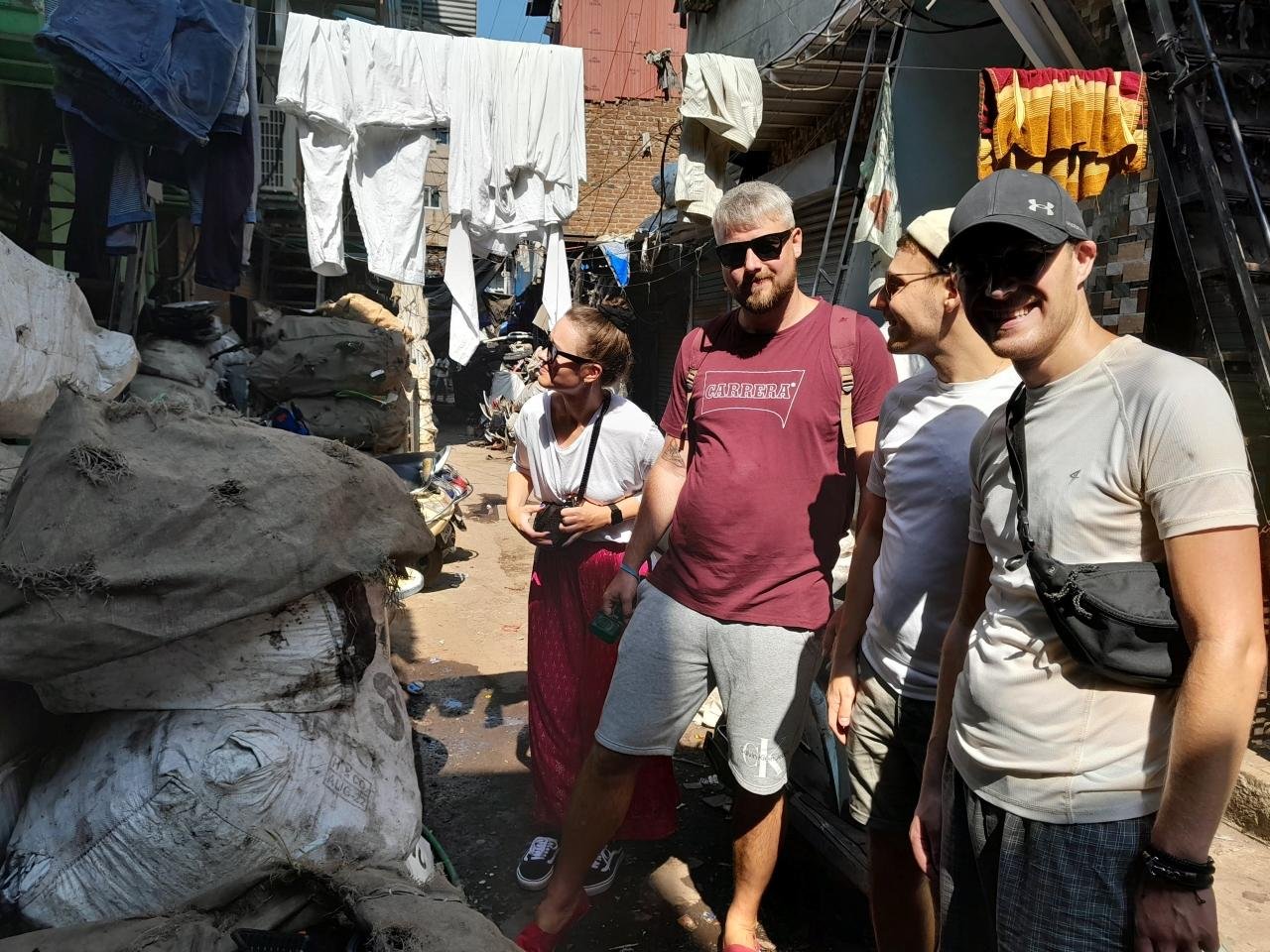
"Dharavi processes an estimated 80 percent of Mumbai's plastic waste, employing thousands who transform discarded material into raw goods sold across India."
Your experience

What a tour day looks like

A step-by-step walkthrough of the visit — what you'll see, how long each stage takes, and the details that matter.

You meet your guide at Mahim Junction, the western rail station that marks Dharavi's northern edge, at 08:30 as commuter trains discharge workers into the lanes. You walk south into the recycling district, passing open-fronted sheds where sorters separate plastic by resin type, color, and grade. Your guide explains the grading system as you watch workers cut PET bottles into flakes, the material destined for polyester thread mills in Gujarat. The air smells of melted polymer and woodsmoke. You turn east into Kumbharwada, the pottery quarter, where a family workshop occupies three rooms stacked above a clay storage cellar. A craftsman works a kick wheel, shaping a cooking pot in 90 seconds, while his daughter smooths handles onto yesterday's batch. Fifty unfired vessels dry on racks overhead. Your guide translates as the potter describes his supply chain: clay from Pune, glaze from local suppliers, finished pieces sold to traders who export them to hotel groups in Goa. You continue through the garment district, past rows of sewing machines stitching denim under bare bulbs, and pause at a papadum bakery where women hand-roll lentil dough on marble slabs. Your guide offers context on wages, working hours, and the cooperative structures that govern many workshops. The walk ends at the 60 Feet Road, Dharavi's main commercial corridor, two hours after departure.

Frequently asked

Frequently asked questions about dharavi slum walking tour tours

What are the opening hours for a dharavi slum walking tour?

The area is accessible daily from 08:00–17:30. Tours should be booked in advance as per the arrival recommendation of 08:00–10:00.

Are there skip-the-line dharavi slum walking tour tickets?

Most tours are small-group experiences and do not require skip-the-line dharavi slum walking tour tickets. Entry is 0 INR, with fees only for the guided service.

Is the dharavi slum walking tour accessible to wheelchair users?

Due to narrow alleyways and uneven terrain, the dharavi slum walking tour is generally not accessible to wheelchair users. Please consult your specific tour provider for accessibility variants.

Can I bring a camera on my dharavi slum walking tour tour?

Yes, you can bring a camera on your dharavi slum walking tour tour, but always ask for permission before capturing photos of individuals or their homes.

What is the best time for a dharavi slum walking tour?

The best time for a dharavi slum walking tour is between 08:00–10:00. This morning window helps avoid the peak midday heat in Mumbai.

Is there a dress code for this Mumbai landmark tour?

There is no formal dress code for this Mumbai landmark tour, but modest clothing is highly recommended out of respect for the local culture.

Are children allowed on a dharavi slum walking tour?

Yes, children are allowed, but the environment is industrial and requires constant supervision. Ensure your chosen dharavi slum walking tour is family-appropriate.

How do I reach the site for my Mumbai landmark excursion?

You can reach the meeting point for your Mumbai landmark excursion via the Western Line train to Mahim Junction. Taxi services are also available.

What is the cancellation policy for these tours?

Cancellation policies for a dharavi slum walking tour depend on the private operator. Check your confirmation for details regarding the 0 INR entrance fee and service costs.